
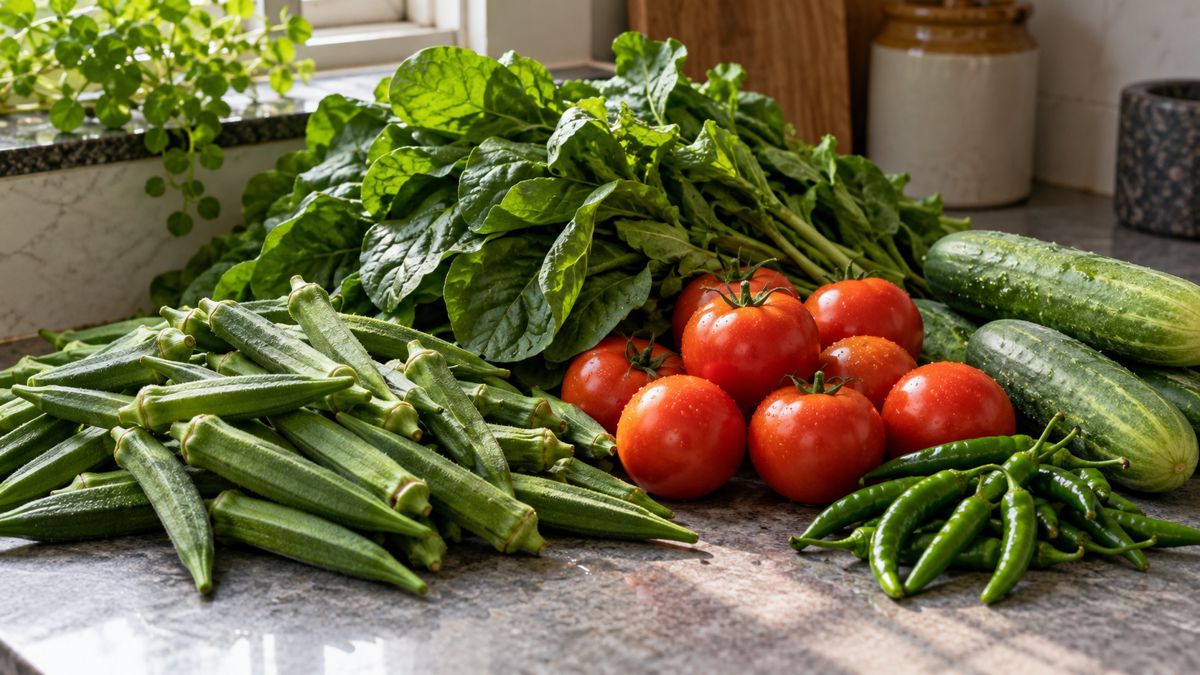
Short answer: a PCOS-friendly plate is built from ordinary home food. Fill about half the plate with sabzi or salad, add a palm-sized portion of protein such as daal, egg, chicken, fish or yoghurt, and keep roti or rice to a balanced portion instead of removing it. You do not need special products. Results differ for every woman, and a personal plan from a doctor depends on your tests, history and health conditions.
This guide shows how to put that idea into practice across a normal Pakistani day. It is general guidance, not a diet prescription, and it does not give calorie numbers.
The idea behind the plate
For many women with PCOS, meals that combine protein, fibre and a moderate amount of starch feel steadier than meals that are mostly refined carbohydrate. A large plate of white rice or several rotis with only a little salan can leave you hungry again soon. The same roti eaten with daal and a vegetable dish tends to be more filling.
The aim is not to cut out any food group. It is to change the proportions a little, keep meals regular and pay attention to how you feel afterwards.
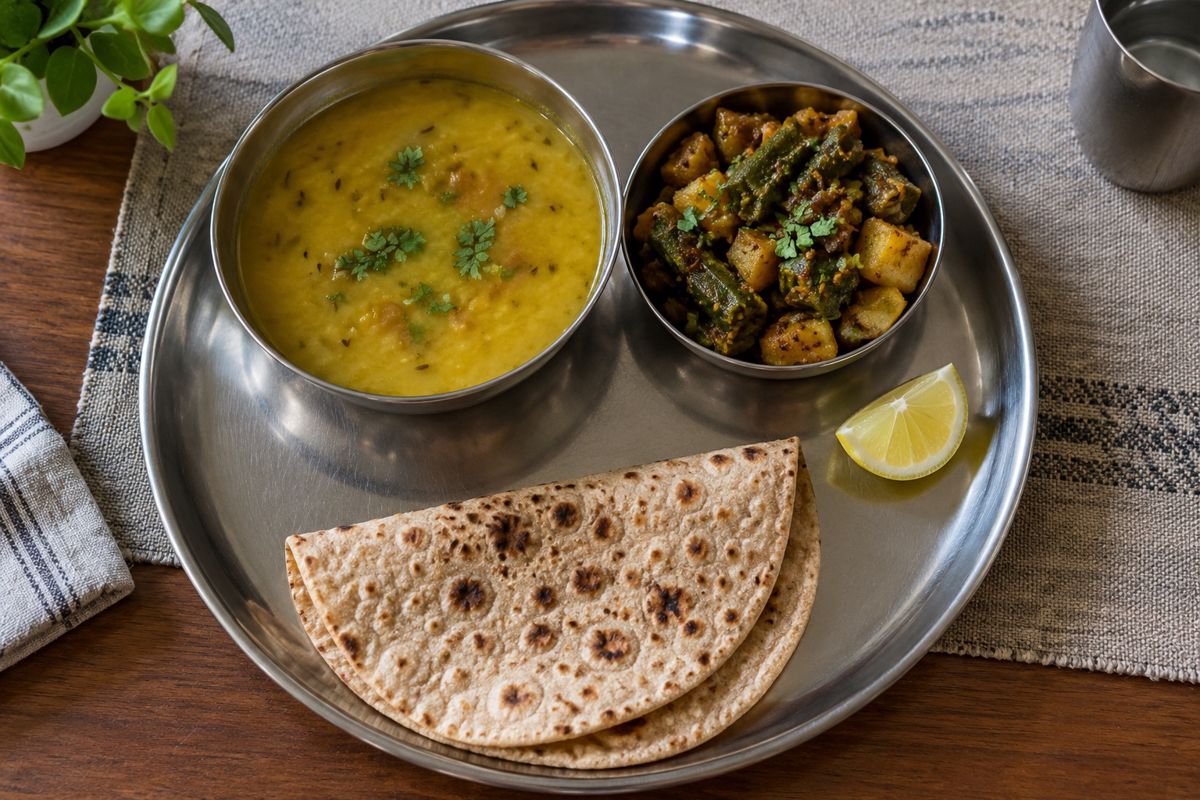
Building each part of the plate
Vegetables and salad
Try to have sabzi or salad at lunch and dinner. Bhindi, tori, palak, karela, lauki, cabbage, cucumber, tomato and carrots are all familiar choices. Cooking with a modest amount of oil is enough, and you can add a side of salad if the main dish is light on vegetables.
Protein
Daal, chana, lobia, rajma, eggs, chicken, fish, paneer and yoghurt all count. Many women eat protein mainly at dinner and very little at breakfast, so one practical change is to add an egg, a little yoghurt or a handful of nuts in the morning.
Roti and rice
You do not need to give them up. Many women do well with one or two rotis, or a small serving of rice, instead of a very large plate. Atta or mixed flour such as chana or jau blended into the atta can add fibre, but the main point is the portion and what you eat alongside it.
Fats
Nuts, seeds and a spoon of ghee or oil in cooking all fit. Heavily fried foods such as samosas, pakoras and puris are better treated as an occasional food than a daily one.
A sample day, as an idea only
This is an illustration of how a day might look, not a plan for you. Portions and choices should change with your appetite, your health and your doctor's advice.
- Breakfast: an egg or omelette with one roti and a cup of chai with less sugar, or yoghurt with a few nuts
- Mid-morning: a piece of fruit, or roasted chana
- Lunch: daal, a vegetable salan, a salad and a modest portion of roti or rice
- Evening: chai with less sugar and a small handful of nuts instead of biscuits
- Dinner: chicken, fish or lentil dish with sabzi and one roti
If your family cooks one meal for everyone, you can usually adjust your own plate rather than cook separately: take a little more sabzi and daal, a little less rice, and add yoghurt or salad on the side.
Drinks, sweets and snacks
Sugary drinks, packaged juices and sweet chai can add up quickly. Cutting these gradually, rather than all at once, is usually easier to keep. Water, plain lassi, unsweetened tea or chai with less sugar are simple swaps.
Sweets do not have to be forbidden. Many women find it easier to have a small portion after a proper meal than on an empty stomach. Eating well-spaced meals often reduces the cravings that lead to snacking in the first place.
Eating well on a busy or shared-kitchen day
Most women do not cook only for themselves, and mothers-in-law, children and work schedules shape what is on the table. A few practical habits can help without a separate kitchen:
- Cook a larger pot of daal or sabzi so there is something ready for lunch the next day
- Keep boiled eggs, roasted chana, yoghurt and fruit at home for days when there is no time to cook
- Serve yourself a plate in the kitchen rather than eating from the dish, so you can see the portion
- Eat slowly and stop when you feel comfortably full, without guilt about leftovers
- During Ramadan, ask a doctor how to plan suhoor and iftar around your health and any medicines
Small, repeatable changes are easier on families than a sudden new menu, and they are more likely to last.
A word about spices and "PCOS foods"
You may see claims online that cinnamon, fenugreek (methi), turmeric or certain teas can treat PCOS. The evidence for these is limited or mixed. They are food choices, not medicine, and they are fine as part of cooking, but they should not replace medical care. If you take medicines for diabetes or any other condition, ask your doctor before using them in larger amounts or as supplements.
Who should check with a doctor first
General guidance is not suitable for everyone. If you have diabetes, kidney disease, are pregnant, or have ever had an eating disorder, please discuss changes to how you eat with a doctor first. Please do not start, stop or change any medicine, including metformin or insulin, without your treating doctor's advice.
A personal plan depends on your history, your test results, your health conditions and the food your family cooks. For ideas that follow these principles, you can read our page on PCOS-friendly Pakistani meals. This is information and support, not a replacement for an in-person examination.
If you would like to ask about a plan built around your family food, message on WhatsApp at +92 331 866 2680.